
Is your software working for you, or are you working around it?
Whether you're running on spreadsheets, working around a system that doesn't fit, or starting from an idea - I'll build it around the way you work.
Tell me what isn't working - and I'll tell you whether it's worth building.
Yes - let's talkHow I can help
No two projects are the same, but most start in one of these five places.
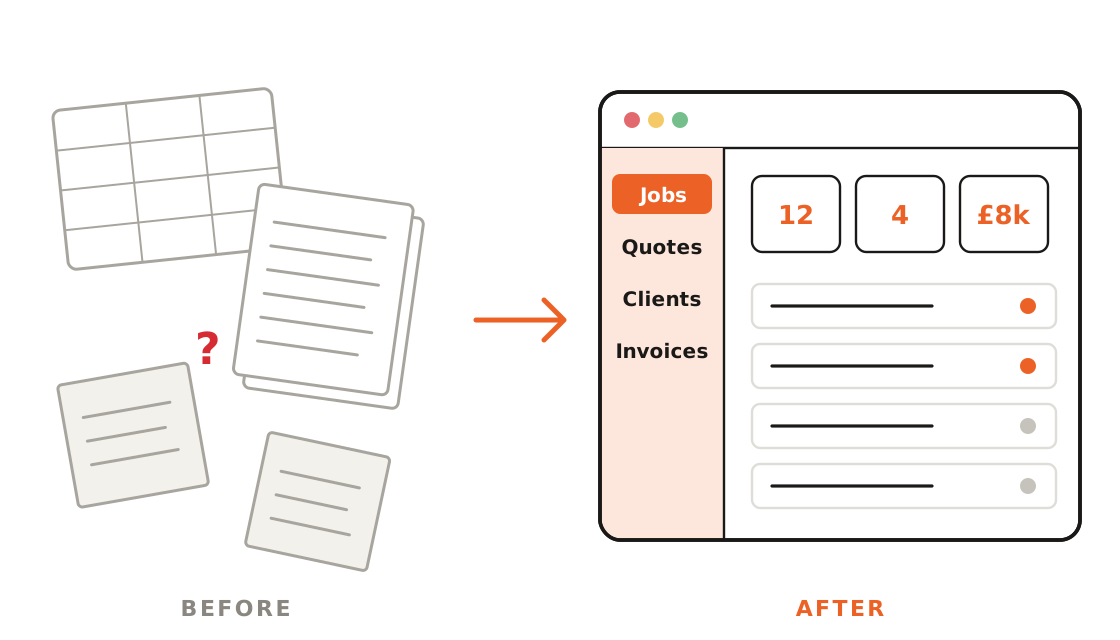
A system built around your business
For when the business has outgrown spreadsheets. The system it runs on, made to fit how you actually work - on the web, a desktop or a phone.
For example
- Client portals
- Booking systems
- Job management
- Quoting and estimating
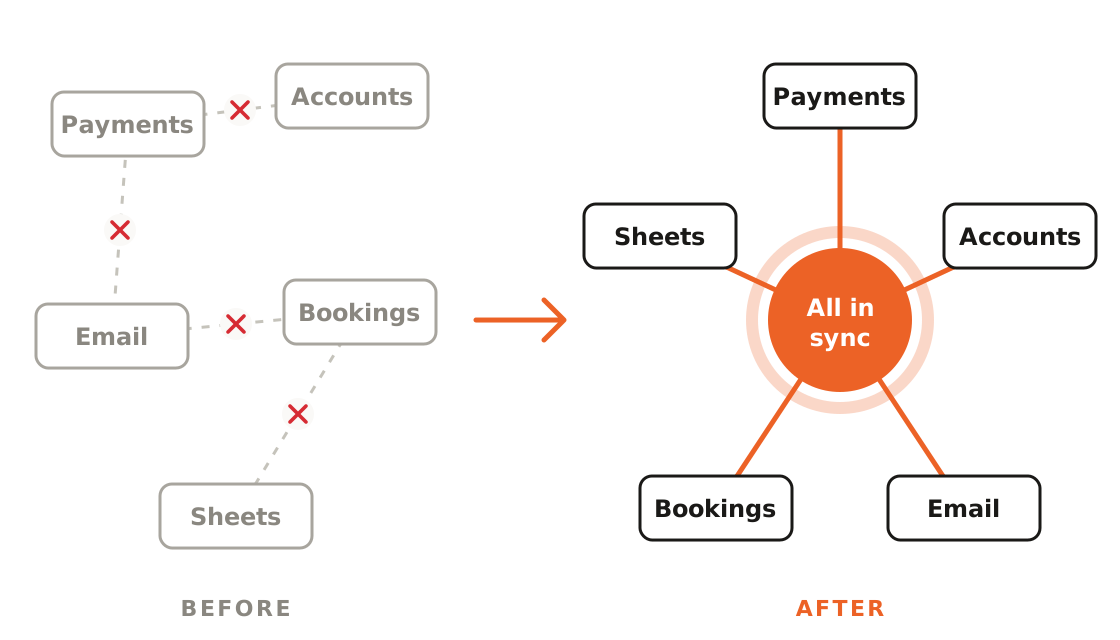
Connecting what you already use
For when your systems don't talk to each other. Information goes in once and arrives everywhere it's needed, and the repetitive work happens by itself.
For example
- Payment gateways
- Accounting software
- Email marketing
- Other tools you pay for
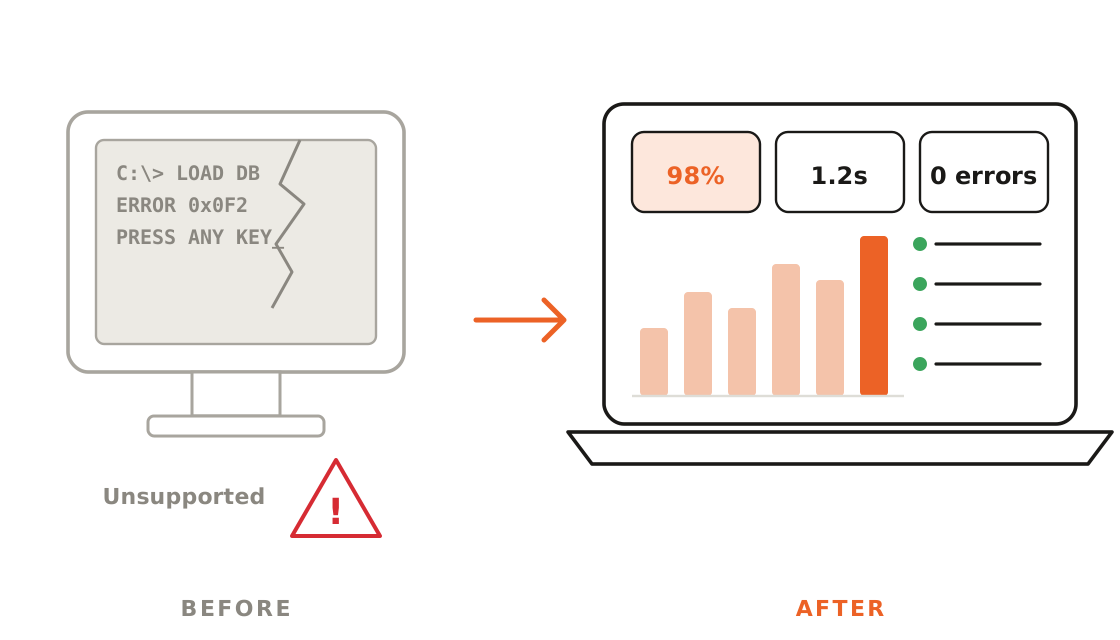
Bringing an old system up to date
Software that made sense years ago and now holds you back - rebuilt without losing the history or stopping the business.
For example
- Access databases
- Excel macros
- Old desktop software
- Unsupported systems
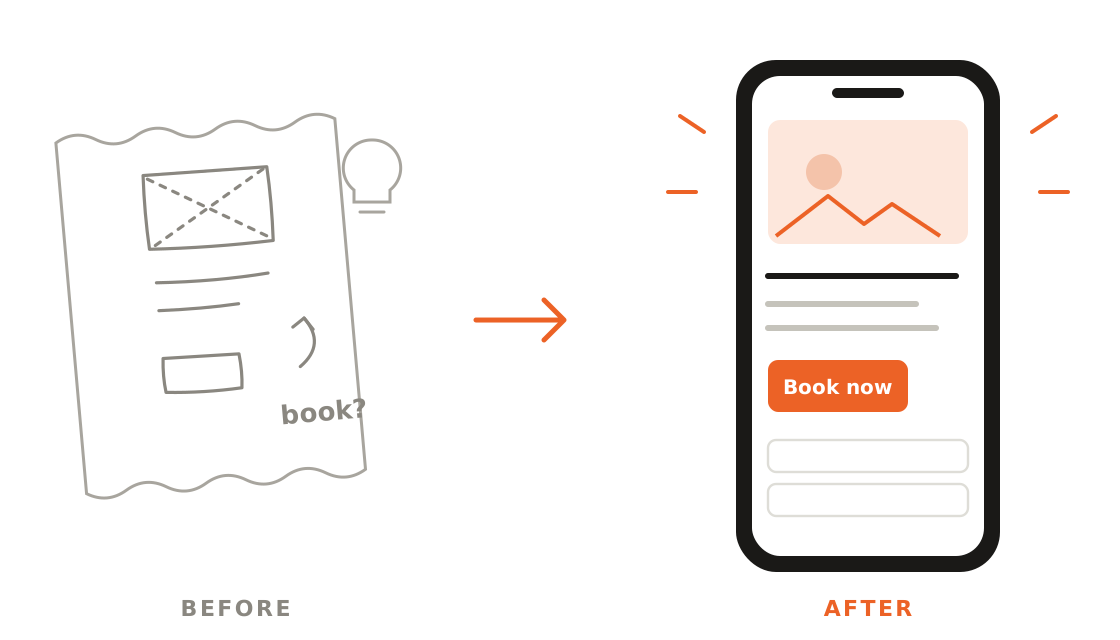
Getting an idea off the ground
A first version built to test the idea rather than every feature, in front of real users while it still matters.
For example
- First versions
- Prototypes
- Proof of concept
- Investor demos
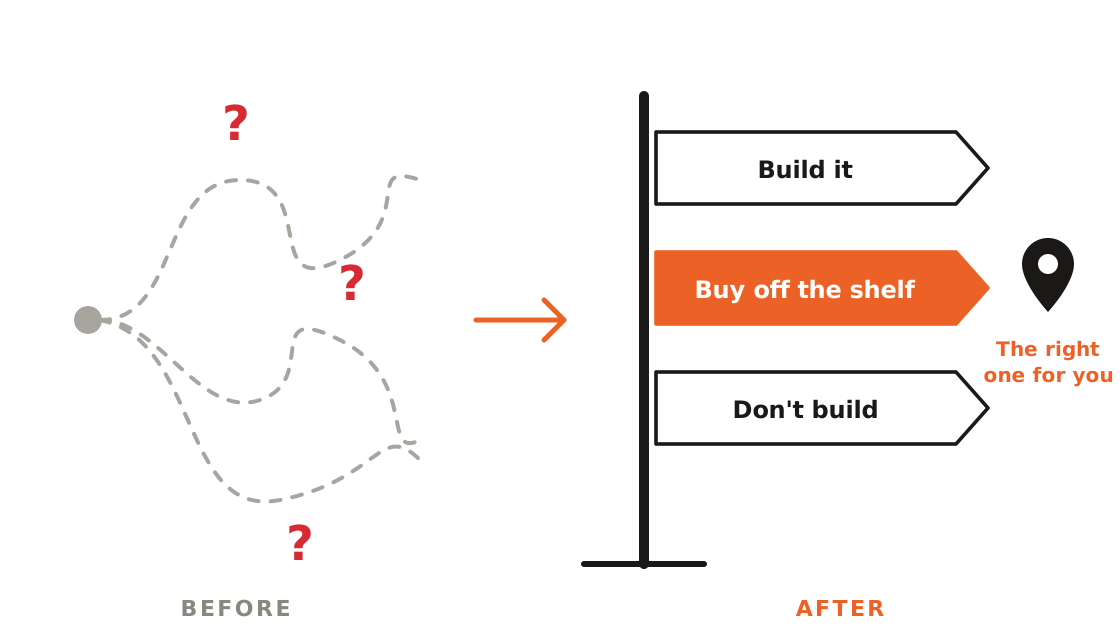
Advice before you build
Not every job is a build. Sometimes what you need is the specification itself, so you can take it to whoever builds it - or a second opinion on a quote you've been given, or someone to pick up a project that stalled. And if the answer is that you shouldn't build anything, I'll tell you that.
For example
- Writing a specification
- A second opinion on a quote
- Picking up a stalled project
- Buying off the shelf instead
Where software projects usually go wrong
-
It costs more than the quote, and takes longer than anyone said
Usually because there was never a proper specification, so the quote and the deadline were guesses from the start. Then the software grows with the business a feature at a time, and new ideas keep landing mid-build - each one adding to the bill and pushing the date.
-
It isn't what you asked for
Usually because the person who listened to you wasn't the person who built it. Your requirements passed from a salesperson to a project manager to a developer you never met, and detail was lost at every handover.
-
Nobody had agreed how the work actually gets done
Usually because the process only existed in people's heads, and no two of them described it the same way. Software has to pick one version, so it picks one - and the first anybody hears about it is when the people who do the job every day are handed something that doesn't match how they do it.
-
Nobody can change it afterwards
Usually because the source code sits with whoever wrote it, nothing is written down, and nobody else understands how it's hosted or what it costs to run. When that person moves on, everything you would need to change it goes with them.
How I keep your project on track
The same five things on every project, from the first phase to the day it is handed over.
- A written specification before anything is built
- You deal with the person building it
- Built in phases, with working software every few weeks
- Yours from day one - code, documentation and accounts
- Ongoing support, if you want it
So what does it cost?
No two projects are the same, so there is no fixed price list. As a guide, this is what a budget typically buys - excluding VAT.
-
Focused work
Up to £15k
One focused tool, or connecting systems you already use so information only goes in once.
- Most projects
A system for your business
£15k-£45k
A system built around how your business works, or a replacement for one that no longer fits.
-
Larger platforms
£45k+
A bigger platform, built and paid for in phases - so you see working software at every stage.
How your price is worked out
- We agree what you need it to do - and what it does not.
- I estimate the time each phase will take, and price it at my day rate.
- You see the price and agree it before anything starts.
You'll never get a bill you didn't agree to
Time and cost are agreed before any work starts.
What is the workaround costing you?
Your workaround costs about
£18,000 a year
Over three years: £54,000
Most bespoke projects cost £15k-£45k to build.
Tell me what isn't workingA rough guide, based on 48 working weeks. Your own figures will vary.
Frequently asked questions
I don't know what I need. Is that a problem?
Not at all - working that out is the first part of the job. You don't need to know what to build, what to build it with, or where it should run. Describe the problem and what it's costing you; the scope, the technology and the hosting are decisions I make and explain, not ones you have to arrive with.
Do you charge for the first conversation?
No. The first conversation is free - you tell me what you need, and I tell you whether I can help. If it's worth taking further, the next step is paid: either a fixed price for writing the specification, or a monthly retainer at a level you're comfortable with. Either way, you agree it before it starts - nothing is ever charged without your say-so.
Can't I just build it with AI?
For a quick prototype, or something only you will use, it might be all you need. AI has made writing code much faster. But someone still has to decide how it's built, where your data lives and how it stays secure, and be there when it breaks.
How long will it take?
It depends on the size of the project, and you get the timeline with the price. The work is split into phases booked in advance, so you know which weeks are yours rather than being fitted in around someone else's project - and each phase ends in something working, so you can see progress rather than waiting for the end.
Can you work with our existing systems and our team?
Yes to both. I start by reviewing what you already run, so anything new works alongside it rather than against it. And your team is usually the most valuable thing in the room - they know how the business actually works, where the exceptions are and what people will and won't do in practice. I work with them, whether that's your developers, the person who knows the spreadsheet, or whoever answers the phone.
Can you take over a project someone else started?
Yes - it's common, whether the developer has moved on or the relationship has broken down. I start by reviewing the code and how it's hosted, then tell you what I've found: what's sound, what isn't, and what it would take to carry on. You get that before committing to anything.
What if I only need something small?
That's fine, and plenty of what I do is exactly that - an integration, an automation, a fix to something someone else left behind. Smaller pieces are quoted by the day rather than as a full build, so you're not paying project prices for a couple of days of work. If it turns into something you want looking after afterwards, ongoing support is priced to match its size rather than starting at the top.
You're one person. What happens if you're busy, or ill?
I only book work I can actually deliver, so I'm not running three builds at once. Phases are scheduled in advance, which means you know which weeks are yours before anything starts - and if a date is going to move, you hear it from me early rather than at the deadline. Anything already live is monitored and backed up, so a problem gets caught whether or not I'm at my desk.
Still got a question? Start a conversation