Websites and software for small UK accountancy practices
Senior-led engineering for accountants and bookkeepers who want their online presence to do more than tick a box. Built for small to mid-sized ICAEW and ACCA-regulated practices.
Let's TalkSenior-led · UK and Isle of Man · Response within 24 hours
Your website is from a different decade than your practice
A website is one of the few marketing assets a small practice has that works continuously - shaping how every prospect first sees the practice and either capturing qualified enquiries or losing them to firms that took it more seriously. Most accountancy websites still describe a generic list of services with no sense of who the practice actually serves or how it is different from the practice on the next high street.
Building software for an accountancy practice is not the same as building a generic small business website. AML/CTF compliance, GDPR for sensitive financial data, secure document collection for client onboarding, integration with cloud accounting platforms (Xero, QuickBooks, Sage, FreeAgent), and Making Tax Digital readiness are all concerns that need to be addressed from day one - not bolted on later when a client query exposes a gap. Getting those decisions right at the start determines what the next five years of practice operations look like.
OLXR fits small accountancy practices that want their digital presence handled properly on an ongoing basis, with someone senior accountable, and the option to grow into bespoke development - cloud accounting integrations, custom client portals, document automation - as the practice scales. We are not the cheapest option for a quick brochure site, and we are not a marketing agency. Where the fit is right, we work the way accountancy practices actually operate.
Three ways we work with accountancy practices
Most practices start with Presence. Some come straight to bespoke when they need integrations or custom client portals. We work the way that fits.
Why small accountancy practices work with OLXR
Direct contact with the engineer
You work directly with Owen - the founder, architect, and engineer building your system - from first conversation to launch and beyond. No sales team, no account managers, no junior staff.
Senior engineering, not junior delivery
OLXR is a senior-led practice. Architecture decisions, integration design, and technical trade-offs are made by someone with over a decade of commercial experience across financial services, fintech, and SaaS.
Honest about scope
Bespoke is only recommended when it earns its cost. If an off-the-shelf tool solves the problem for less, you will hear about it. Most of our work comes from referrals and repeat clients, which only works if the advice is honest.
Isle of Man perspective where relevant
OLXR is based on the Isle of Man. For firms with no IoM connection this is neutral. For firms with IoM clients, IoM-resident partners, or trust and corporate work involving the Crown Dependencies, the IoM perspective is a real advantage.
Fintech background applied to accountancy
OLXR has direct commercial experience in fintech, banking, and financial services SaaS. The patterns that work for accountancy practices - secure data handling, integration with cloud accounting platforms, regulatory-aware design, audit trails, structured client onboarding - are familiar territory. We are not figuring out what AML or KYC mean while building your website.
What a working accountancy practice website actually does
A modern small-practice website should be doing several things at once. Most fall short in similar ways. Here is what the practices with genuinely effective online presence get right.
Reflects the actual practice, not the textbook practice
Most practice websites describe self-assessment, payroll, and year-end with copy that could fit any firm - making every practice look identical and preventing prospects from identifying the right fit.
Service pages should describe what the practice actually does. Specialism (dental, charity, owner-managed) should be obvious from the homepage; specific work and clients build credibility.
Integrates with your cloud accounting stack
Most practice websites have no integration with the firm's cloud accounting stack. The website lives in one world and the practice operations live in another, with the practice manager copying data between them.
Connecting Xero, QuickBooks, Sage, or FreeAgent to client portal access, document exchange, and onboarding flows that prepopulate practice systems is straightforward when it is designed in from the start.
Triages enquiries by service area and complexity
Most practices send every enquiry to one inbox and triage manually - which costs partner time and creates the impression of slow response.
A contact form that asks the right questions (nature of work, existing client, sector and turnover band, accounting software) sorts genuine enquiries from timewasters before anything reaches the practice.
Handles client onboarding and document collection securely
Most small practices still ask new clients to email AML identification, prior year accounts, and agent authorisations to admin@ - insecure, slow, and creates inbox liability.
A simple secure upload that ties to the practice's onboarding workflow protects everyone, reduces the back-and-forth, and creates a better first impression.
Is fast and works on mobile
Plenty of practice enquiries start on mobile - a friend recommends a practice, the prospect searches the name on a phone, the site loads slowly or breaks, and the prospect leaves.
The site needs to load fast and work properly on a phone. Site speed is also a Google ranking factor for local searches, so getting this right has compound effects.
Tells search engines what kind of practice it is
Most small practice sites are invisible to local search despite having reasonable content, because nothing on the page tells Google what the practice actually does or who it serves.
Structured data (AccountingService schema), local SEO signals, proper sitemaps, and accurate Google Business Profile integration get the practice into the searches that matter.
AML, professional standards, and what small practices get wrong
Accountancy practices in the UK operate under a mix of frameworks - professional body supervision (ICAEW, ACCA, AAT, ICAS, CAI, IFA), HMRC oversight, and AML/CTF rules across the board. The technical implementation differs by professional body but the underlying digital standards are largely consistent.
Anti-money laundering and client identification
AML/CTF is the single biggest compliance area affecting practice websites. Client identification, source of funds checks, ongoing monitoring - all of it depends on capturing and storing the right information securely from the start. Practice websites that ask for "name and email" and then handle the rest by email are creating compliance risk that should be designed out at the website level.
GDPR, professional body requirements, and MTD
Accountancy data is sensitive by definition - financial information, payroll data, business secrets, sometimes special category data. Privacy notices need to reflect actual processing, retention periods that match file retention policy, and clear handling of subject access requests. Each professional body has its own requirements for member firm communications - the website should reflect registered status correctly. Making Tax Digital continues to evolve and the website should communicate the practice's readiness honestly rather than relying on vague "we handle MTD" copy.
Other UK and Isle of Man jurisdictions
Scottish chartered accountants are typically regulated by ICAS. Northern Irish chartered accountants are typically regulated by Chartered Accountants Ireland (CAI), which covers both NI and the Republic. IoM accountancy practices may be supervised by ICAEW or other UK professional bodies with additional IoM-specific requirements. The technical capabilities apply equally across jurisdictions; the regulatory references differ.
What we do not do. OLXR is a software development consultancy, not a accountancy practice. We build technically compliant systems and structure content to meet the relevant regulatory framework. Specific compliance review (privacy notice text, AML procedures, professional body disclosures) needs your compliance partner or principal to sign off, not us.
Presence and what comes after
OLXR Presence is built for small practices that need their online presence handled properly without becoming another project to manage. For most practices, Presence is everything they need. For those that grow, it is the foundation the next stage builds on.
The digital foundation, done properly
- Modern, fast, secure managed website
- Hosting, domain, SSL all included
- Senior engineer accountable for ongoing improvements
- AML and GDPR compliance properly implemented
- Service pages reflecting actual specialisms
- Secure document upload and structured client onboarding
Bespoke development around the foundation
- Custom client portal for ongoing engagements
- Integration with Xero, QuickBooks, Sage, or FreeAgent for client data exchange
- Document automation for engagement letters, fee proposals, AML packs
- Onboarding workflows that prepopulate practice management software
Strategic work as the firm grows
- Custom internal tools the practice has outgrown spreadsheets for
- Specialist sector dashboards (e.g. for clients in healthcare, charities, hospitality)
- Practice management or workflow systems where off-the-shelf does not fit
- Fractional CTO support for practices growing past the SaaS-and-spreadsheets stage
Most practices only need step one. But if you grow into step two or three, you have a partner who already understands practices like yours and your stack.
See a worked example
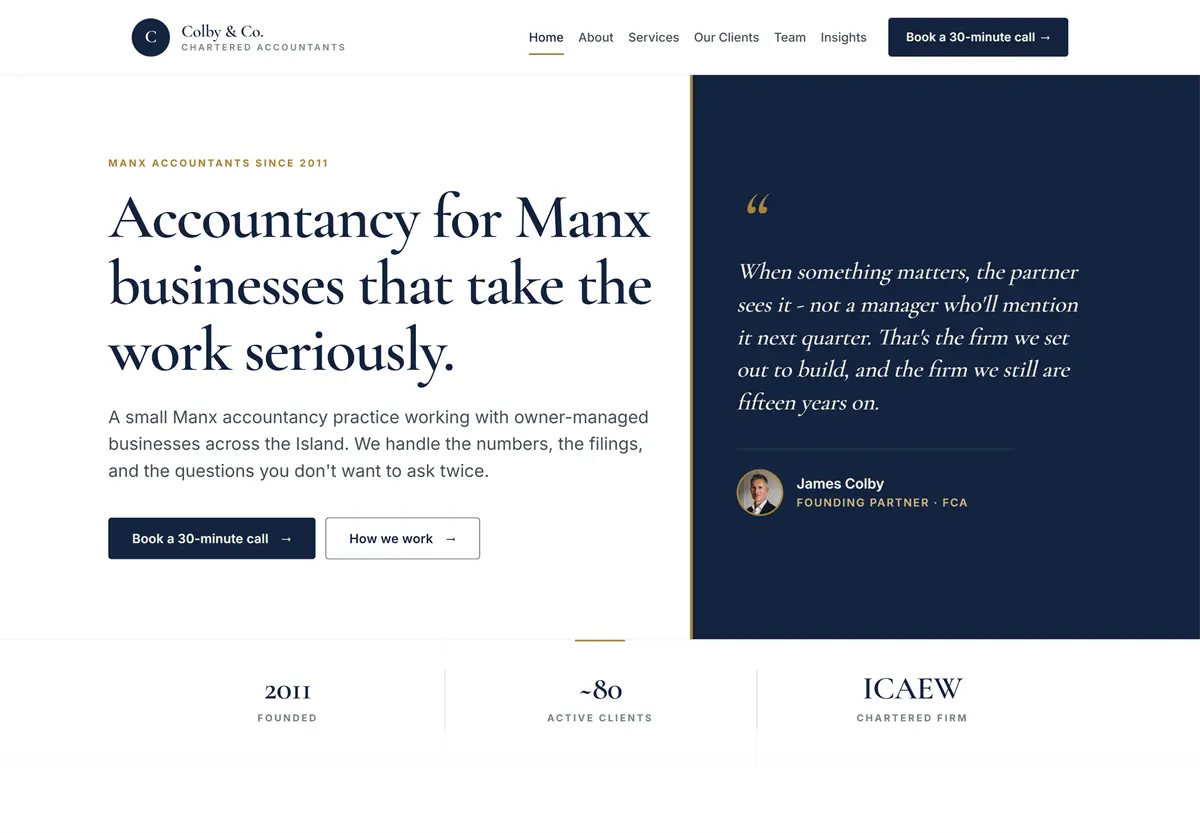
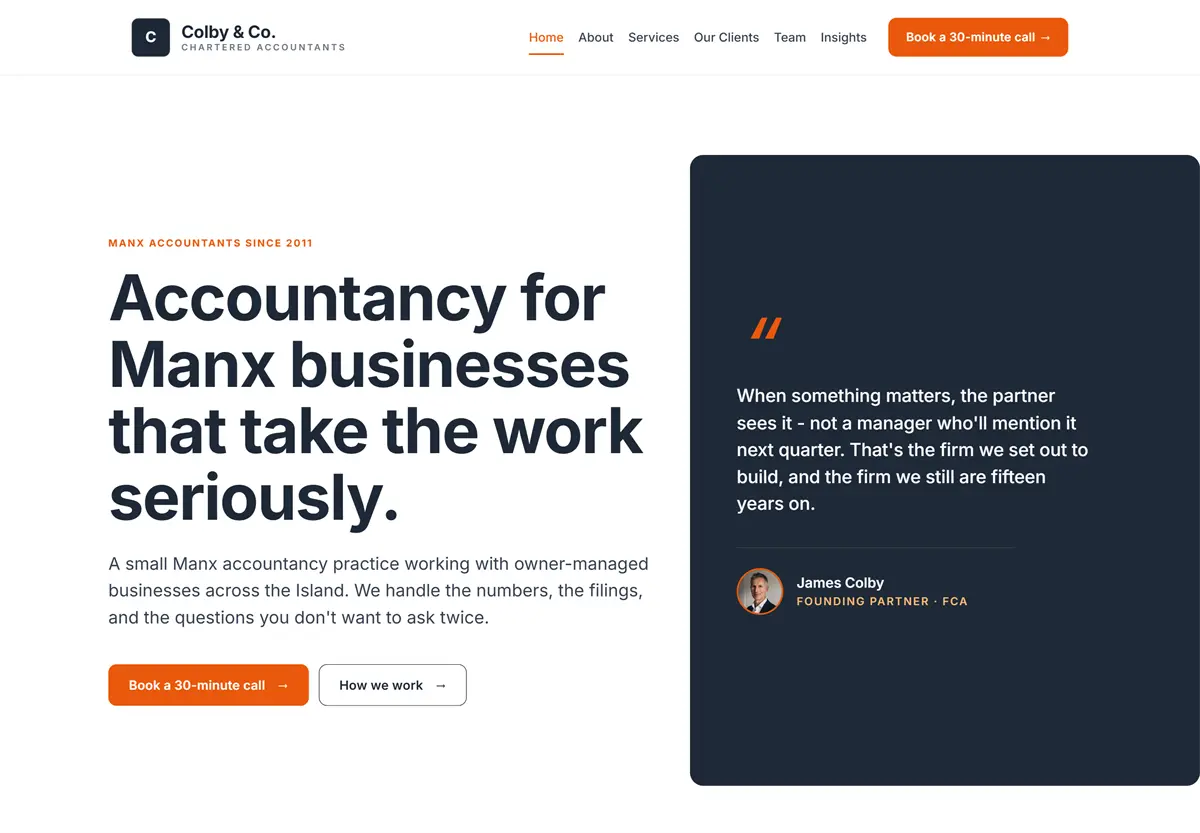
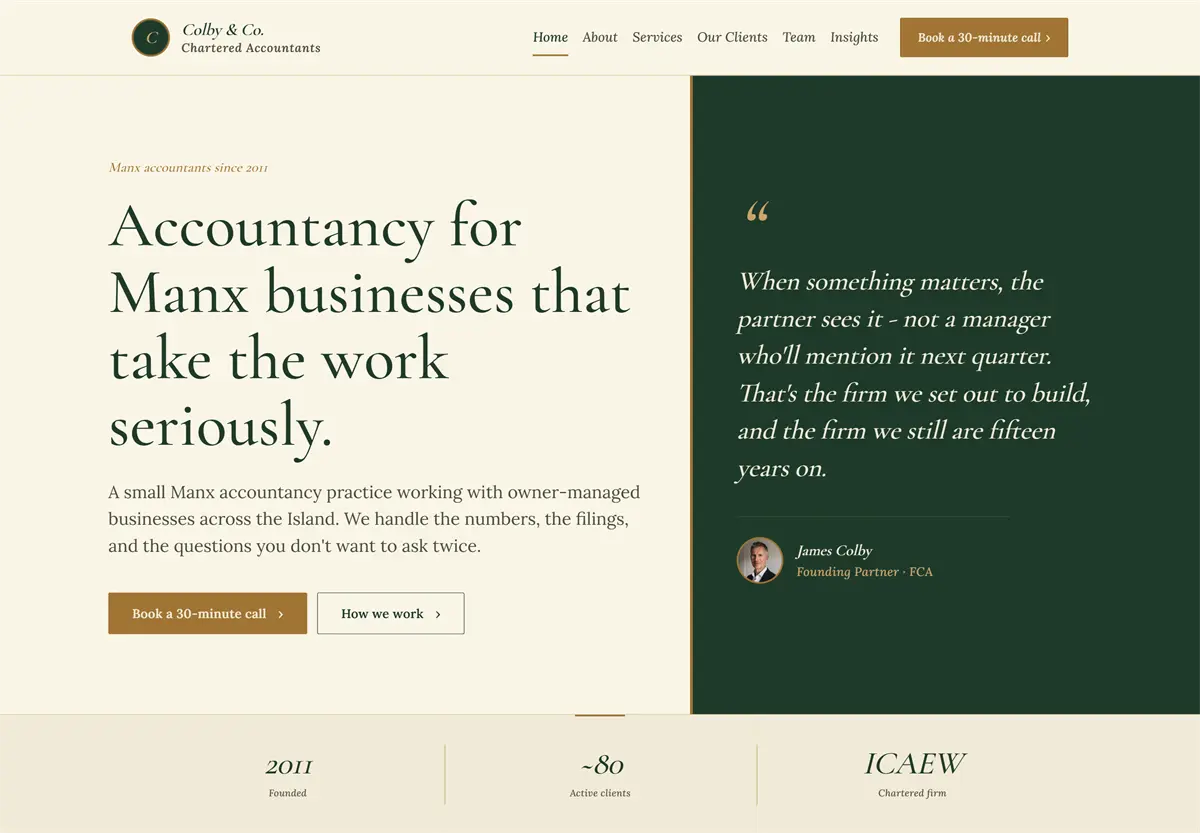
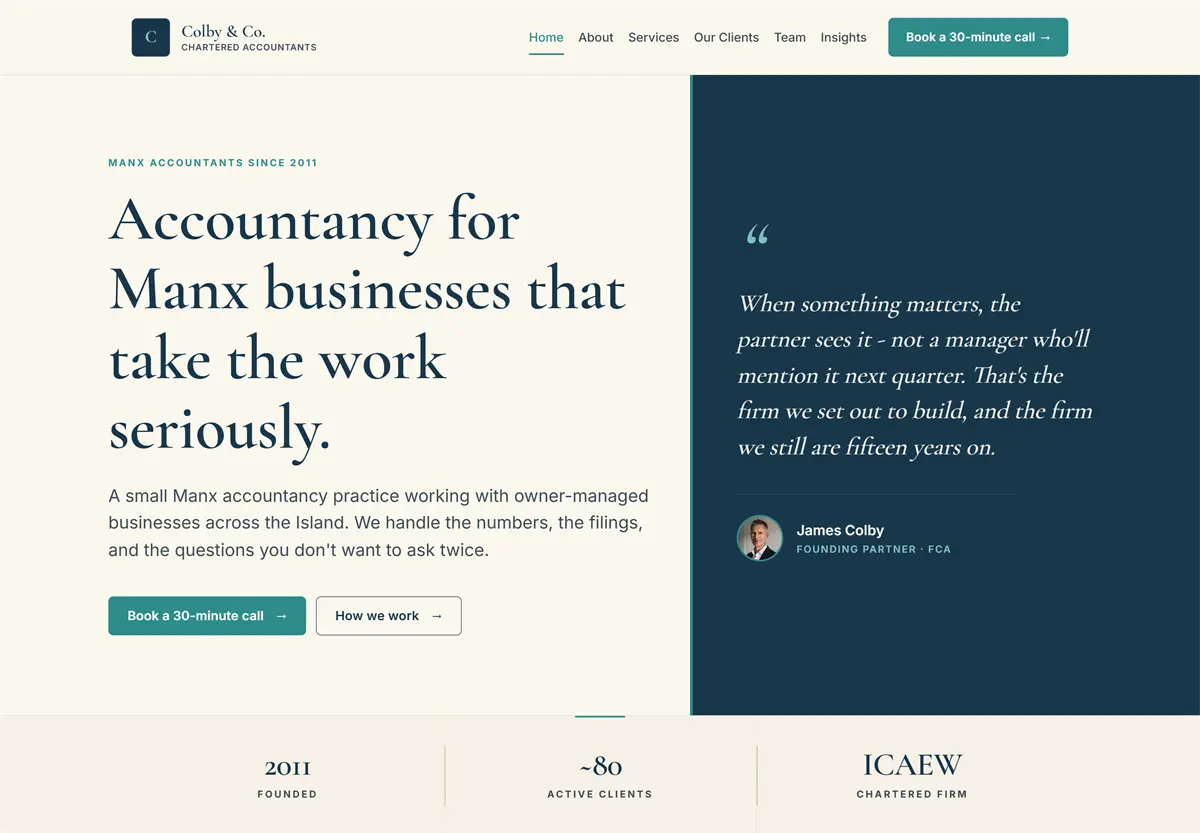
Colby & Co. Chartered Accountants – a Presence build on the Foundation tier
A fictional Manx chartered accountancy practice built on the Foundation tier - the everyday-marketing site done properly, with an admin panel showing how content is managed. Click a theme below to walk through the demo in that style.
How working with OLXR actually goes
From first conversation to ongoing relationship.
Step 1
Discovery conversation
A 30-minute call with Owen. We learn about your firm and what you are trying to solve. No sales team, no preparation needed.
Step 2
Honest assessment
Within a few days, an honest view: whether OLXR is the right partner, what the work would involve, what it would cost, and how long it would take.
Step 3
Build or migrate
We build the new site or migrate and improve your existing one - properly, with the regulatory and operational considerations addressed from day one.
Step 4
Ongoing engagement
Once live, the relationship continues. Hosting, security, monitoring, content updates, regulatory compliance, and improvements over time - all included.
Frequently Asked Questions
Other sectors we serve
Many firms have adjacent professional services in their network. These pages may be relevant.
Start with a conversation
If you are evaluating OLXR as a potential partner for your practice, the next step is a 30-minute conversation. Tell us what you are trying to build or solve. We will tell you honestly whether we are a fit, what it would take to do it properly, and what the realistic costs and timeline look like.
You will speak directly with Owen. No sales team, no hand-offs.
Free consultation · No commitment · Response within 24 hours