DomainDasher
A case study in building a domain marketplace - mobile first, then web.
Visit domaindasher.comDomainDasher is a domain name marketplace built and owned by OLXR. It is currently in active development. This page describes what we are building, the decisions we have made along the way, and why we made them.
The Problem
Buying and selling domain names is a fragmented, friction-heavy process. The primary marketplaces that exist were built a long time ago and show it - slow interfaces, opaque pricing, poor trust signals, and transfer processes that leave buyers and sellers navigating registrar-specific instructions alone.
For domain investors, managing a portfolio of domains across multiple listings is cumbersome. Adding domains, setting pricing, running auctions, and tracking offers typically involves multiple tools and no single coherent workflow. For buyers, finding a domain they want and completing a purchase with confidence requires more effort than it should.
The opportunity is a modern, well-engineered marketplace that handles the full transaction - from listing to payment to domain transfer - cleanly and with the trust mechanics that this type of market requires. Domain transactions involve real money changing hands for an intangible asset. Trust, transparency, and a reliable transfer process are not optional features.
What We Are Building
DomainDasher is a marketplace for buying and selling domain names. Sellers list domains at a fixed price, with offer negotiation, or as timed auctions with reserve prices and automatic bidding. Buyers can browse, make offers, bid, and complete purchases through a single platform. Payments are handled through Stripe, with automatic platform fees and seller payouts via Stripe Connect. The transfer process is guided - the platform captures registrar details, authentication codes, and TLD-specific instructions to walk both parties through handover.
The platform includes bulk domain management for investors with large portfolios, a reputation system with buyer and seller ratings that builds over time, and push notifications for auction activity, offer responses, and payment deadlines.
It is built across two platforms - a React Native mobile application and a full web application - sharing a single API backend.
Key Decisions
DomainDasher has required deliberate decisions across platform strategy, architecture, and tooling. Below are the ones that have most shaped the build so far.
We built mobile first
Development began with the mobile application rather than a web platform. The reasoning was straightforward: domain investors and buyers are active across devices, and a well-executed mobile experience was the right starting point for a marketplace built around speed and responsiveness. The mobile application was built using React Native with Expo, producing native iOS and Android applications from a single codebase. The backend API was designed from the outset to be the single source of truth, with the mobile application as the first consumer.
We added a web application based on user feedback
Early feedback made clear that requiring users to download an app before they could browse available domains was a significant barrier. Casual buyers - people who are not committed domain investors but might want a specific domain - are unlikely to install an application just to see what is available. A web presence removes that barrier entirely. Because the API was already designed as the platform backbone rather than a mobile-specific backend, adding a web frontend was a straightforward decision rather than an architectural change. The API did not need to change - a web layer was added alongside the existing mobile application consuming the same endpoints.
React Native over .NET MAUI
KEEP.FIT, another OLXR product, uses .NET MAUI for its mobile application. DomainDasher uses React Native. The choice was deliberate and context-specific. React Native has been the dominant cross-platform mobile framework since 2015 and has a significantly larger adoption base than .NET MAUI, which is a relatively young framework still maturing. For a marketplace with auction mechanics, real-time bidding, payment flows, and push notifications, the React Native ecosystem offered more mature, battle-tested tooling. Stripe's React Native SDK is more developed than its .NET MAUI equivalent. Expo's managed workflow accelerates mobile development and handles much of the infrastructure overhead around builds, updates, and push notifications. OLXR does not default to a single mobile stack - we evaluate what the product requires and choose accordingly.
API-first architecture
The decision to design the API as the core of the platform rather than as a mobile-specific backend proved its value when the web application was added. An API-first approach means the backend is indifferent to what consumes it - mobile, web, or any future integration. It also means the business logic lives in one place, tested and maintained once, rather than duplicated across platforms. The API is RESTful with JWT authentication, documented via OpenAPI, rate-limited, and load-tested. These are not afterthoughts - they are decisions made at the architecture stage because a marketplace handling real financial transactions requires them from the start.
Stripe Connect for marketplace payments
A standard Stripe integration handles payments from a single seller to a single platform. DomainDasher is a marketplace - payments flow from buyers to sellers, with a platform fee retained by DomainDasher. This requires Stripe Connect, which is a more complex integration than standard Stripe but is the correct tool for the problem. Connect handles seller onboarding and verification, splits payments between the seller and the platform automatically, manages seller payouts, and handles the compliance requirements around money movement. Implementing it correctly required careful work, but it means the payment infrastructure is built on solid foundations rather than a workaround.
Screenshots
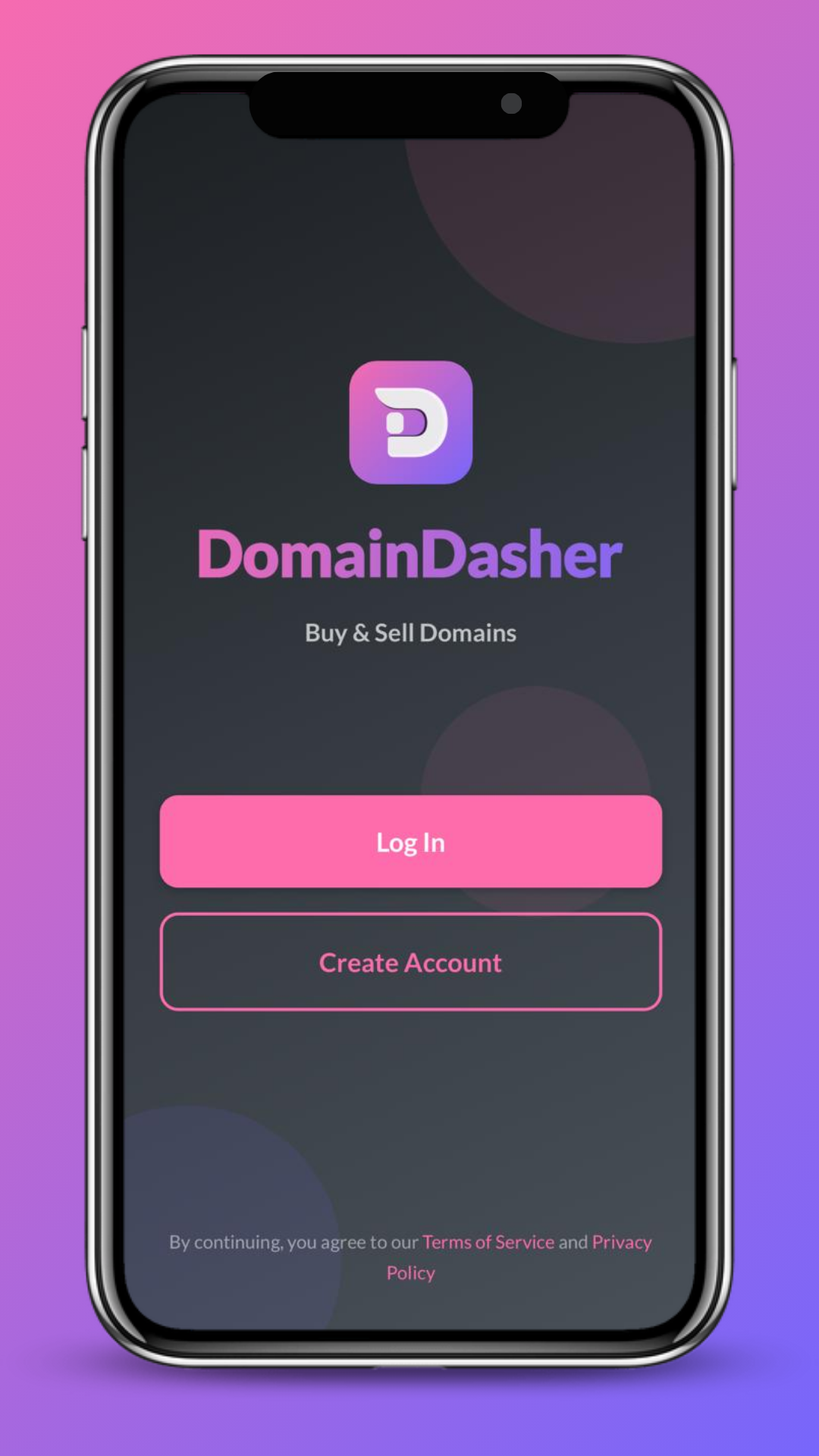
DomainDasher App Login
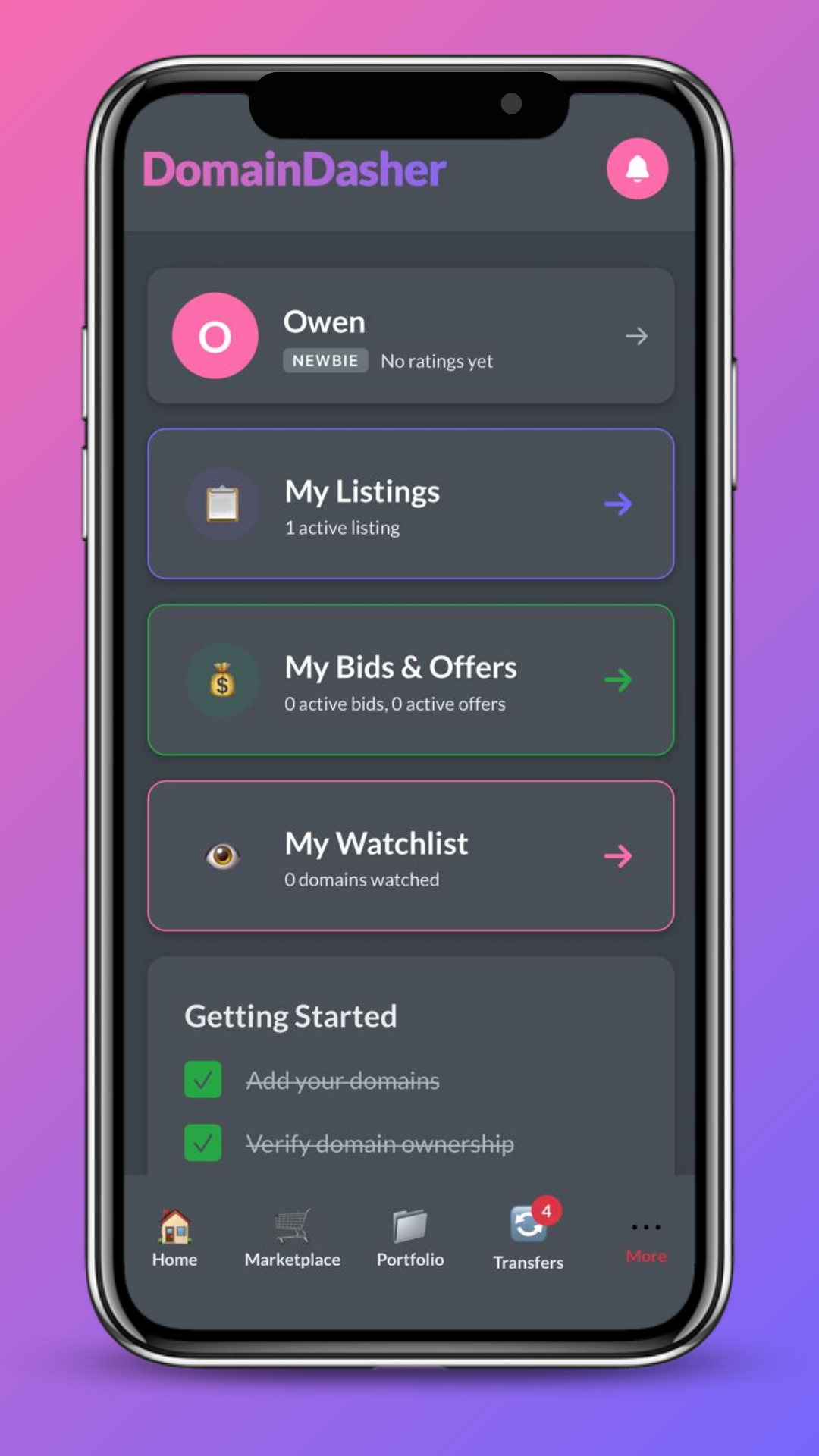
DomainDasher Dashboard
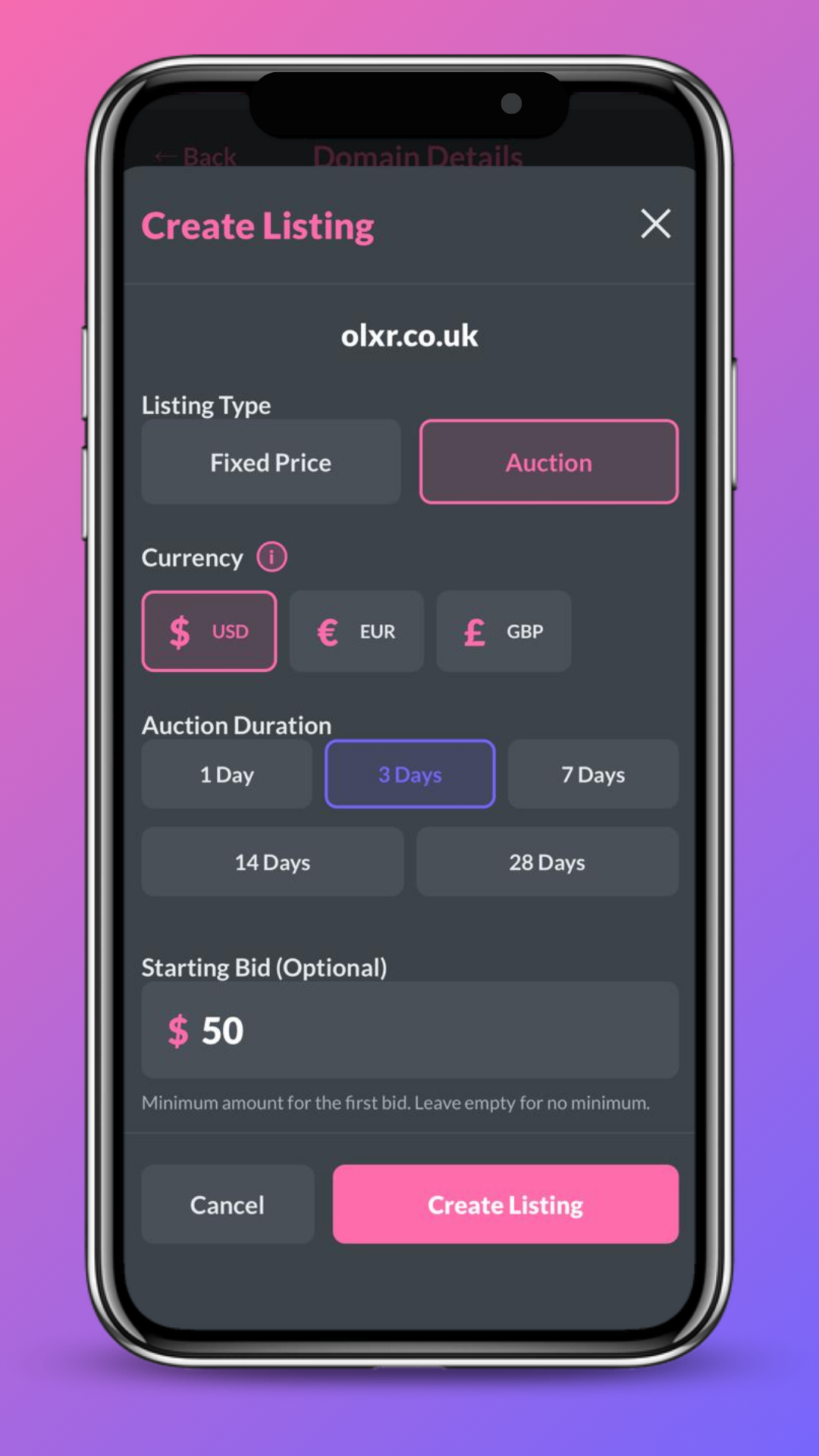
DomainDasher Domain Name Listing
Where the Product Stands
DomainDasher is in active development. The core marketplace functionality - listings, auctions, offer negotiation, payments, and domain transfer - is built. The mobile application and web application are both in development alongside the backend API.
The decision to build this product reflects the same thinking behind RepeatPosts and KEEP.FIT: the best way to demonstrate that OLXR can build a marketplace is to build one. DomainDasher is a genuinely complex product - it involves real financial transactions, a two-sided market, auction mechanics, and a guided transfer process for an intangible asset. Building it ourselves means we understand every layer of what a marketplace requires, from the payment infrastructure to the trust mechanics to the operational workflows.
Technical Reference
Have a project in mind?
We are happy to discuss what you are building and whether we are the right fit.
Start the Conversation