KEEP.FIT
A case study in building a fitness platform - and rebuilding it when the model needed to change.
Visit keep.fitKEEP.FIT is a fitness platform built and owned by OLXR. It runs across web and mobile, is live, and is actively used. This page describes how it was built, the product strategy decision that led to a full platform rebuild, and what that process taught us.
The Problem
The fitness app market is large and crowded. Most of what exists in it is built for people who are already motivated - people who know what they want to do and need a tool to help them do it. Beginners are consistently underserved. The apps they encounter assume a level of knowledge, commitment, and confidence they do not yet have. The result is poor retention: people download, try, and leave.
There is a second problem that sits alongside this. Fitness content - exercise libraries, workout programmes, training plans - is expensive and time-consuming to produce well. Platforms that own their content own a liability as much as an asset: it needs maintaining, expanding, and keeping accurate as understanding of exercise science evolves.
The problem we set out to address was access. Fitness should be available to everyone, regardless of experience level, location, or whether they have a gym membership. The platform needed to work for a beginner doing their first home workout and an experienced athlete following a structured training programme.
What We Built - And Why We Rebuilt It
The first version of KEEP.FIT was built as a content-led platform. OLXR owned and produced the fitness content - the exercise library, the workouts, the training plans. Users came to the platform, consumed the content, and followed structured programmes we had created. It was a reasonable starting model and it worked technically. The problem was the content itself.
Owning the content meant owning the ongoing responsibility for it. Every new workout, every new training plan, every update to the exercise library required resource. The platform's value was directly tied to the volume and quality of content OLXR produced - which is not a scalable model for a two-sided market. We were functioning as a content business rather than a platform business, and the distinction matters.
The decision was made to rebuild the platform around a different model entirely: community and user-generated content. Rather than OLXR providing the fitness content, the platform would provide the infrastructure for users and trainers to create, share, and follow each other's workouts and plans. OLXR provides the tools. The community provides the content.
This is a fundamentally different product. The architecture, the feature set, the user flows, and the business model all change when you move from content ownership to platform ownership. The rebuild was not a minor iteration - it was a considered strategic decision to change what KEEP.FIT actually is.
The Decision to Rebuild
Rebuilding KEEP.FIT around a community model required deliberate decisions across strategy, architecture, and tooling. Below are the ones that shaped the platform as it exists now.
From content platform to community platform
The original model required OLXR to produce and maintain all fitness content. This created a ceiling on growth - the platform could only be as good as the content we had time to produce. The community model removes that ceiling. Users create workouts and plans, share them with the community, and others follow and adapt them. The platform's value grows as the community grows, not as OLXR's content team grows. This is a more durable model for a fitness platform at scale.
Rebuilding the architecture around user-generated content
Moving to a community model required rethinking the data architecture from the ground up. A content platform needs a schema designed around fixed, curated content. A community platform needs a schema designed around user ownership, social relationships, content discovery, and moderation. These are different problems. The database was redesigned with user-created workouts and plans as first-class entities - not content that OLXR manages, but content that users own, share, and can make public or private. The social layer - follows, community forums, gym connections - was built on top of this foundation.
Cross-platform mobile with a single codebase
KEEP.FIT needed to work on iOS and Android without maintaining two separate native applications. We used .NET MAUI - Microsoft's cross-platform mobile framework - which allows a single C# codebase to produce native applications for both platforms. This was a deliberate choice to keep the mobile and web application aligned: shared business logic, shared data access patterns, and a single development effort rather than two. The trade-off is that .NET MAUI is a relatively young framework and required working around some rough edges during development. The benefit is a mobile application that is genuinely native on both platforms without the overhead of two separate codebases.
Unified identity across web and mobile
A user logging into KEEP.FIT on the web and on mobile should have a single account. Achieving this cleanly required a proper identity server rather than a simple username and password system bolted onto each application. We implemented Duende IdentityServer - an industry-standard identity platform - with OAuth2 and OpenID Connect. This gives users a single login that works across web and mobile, supports social login via Google and other providers, and is built on open standards rather than a proprietary authentication system. It also means the identity infrastructure can support additional applications or integrations in the future without rearchitecting.
AI-assisted content generation
The exercise library - 900+ exercises with instructions, muscle diagrams, and video guidance - needed to be populated without making content production a permanent bottleneck. We built a custom AI agent trained on KEEP.FIT's exercise library that allows the team to generate new exercises, challenges, and workout suggestions by prompt, with every output grounded in the existing verified content. This is not a public-facing AI feature - it is an internal production tool that removes the manual overhead of content creation while maintaining consistency and accuracy across the library.
What the Platform Includes
KEEP.FIT runs across web and mobile. Users can create and follow workouts, build and share training plans, track progress through personal dashboards, maintain daily streaks, follow guided sessions in real time, and connect with other users through community forums. The exercise library contains over 900 exercises with step-by-step instructions, muscle diagrams, difficulty levels, and demo videos.
Gyms can create profiles on the platform and users can connect their account to gyms they visit, linking the digital experience to physical locations. Subscription management is handled through Stripe, with membership plans and a launch promotion model already in place.
Screenshots
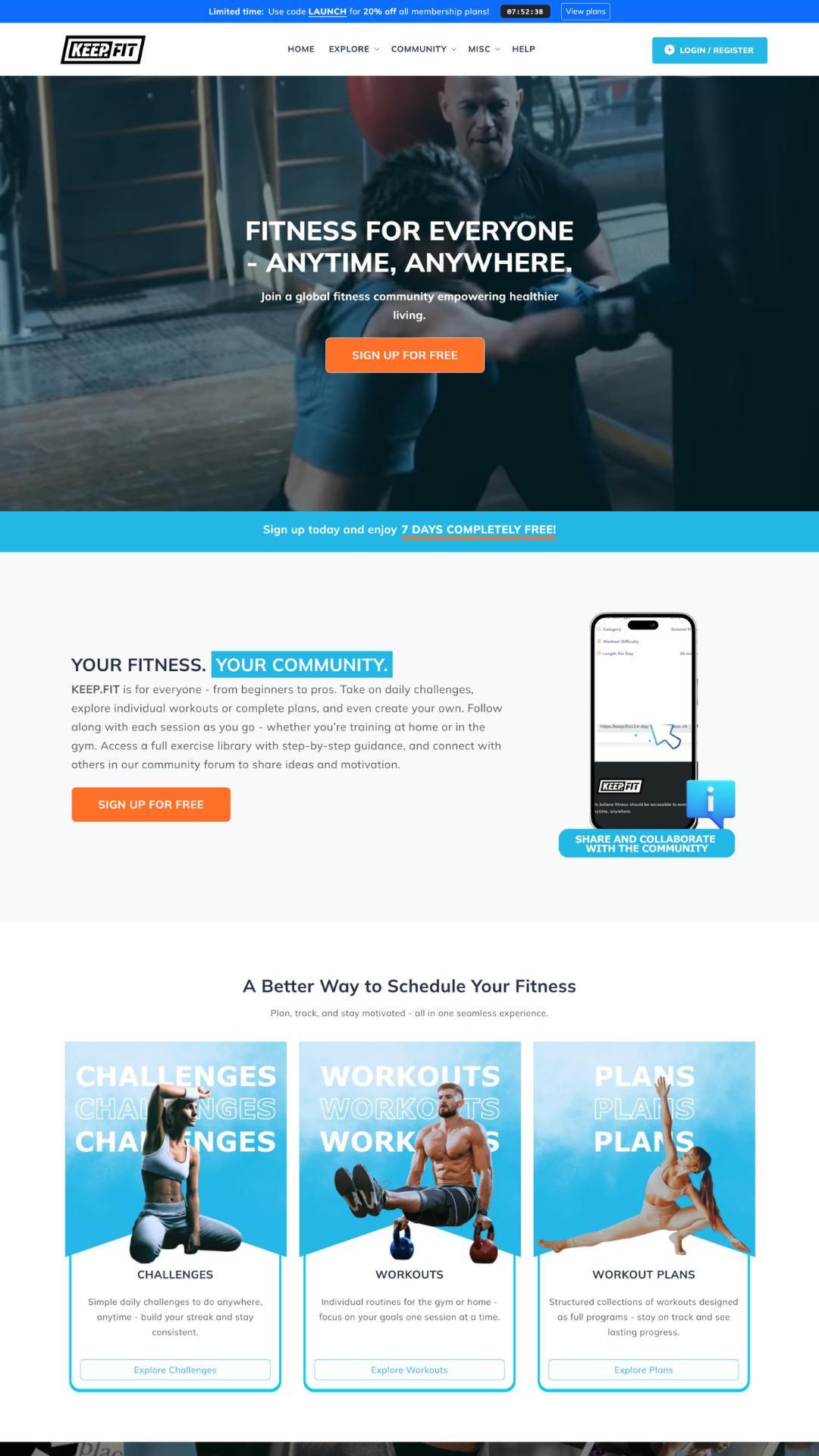
Homepage 1/2
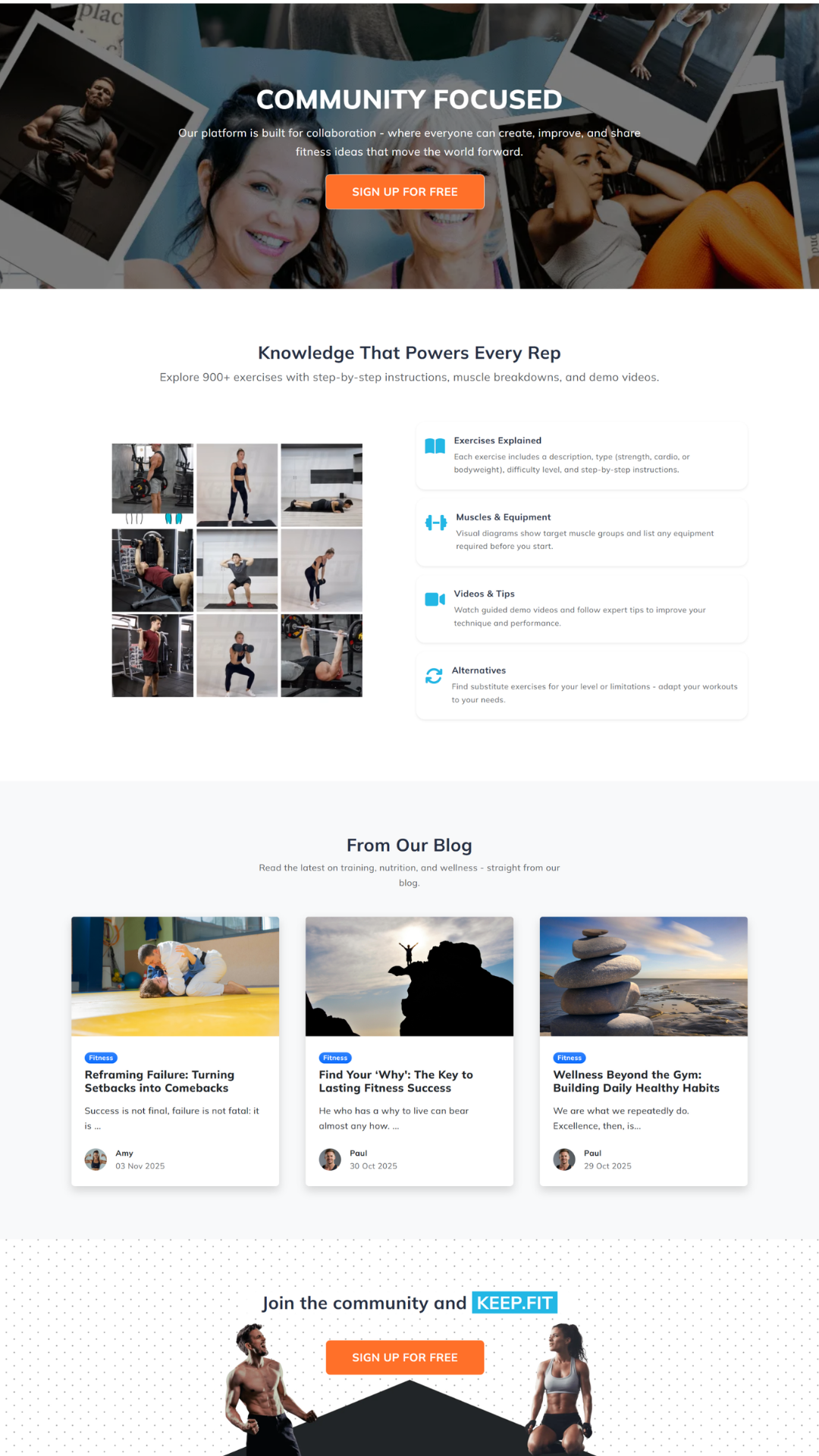
Homepage 2/2
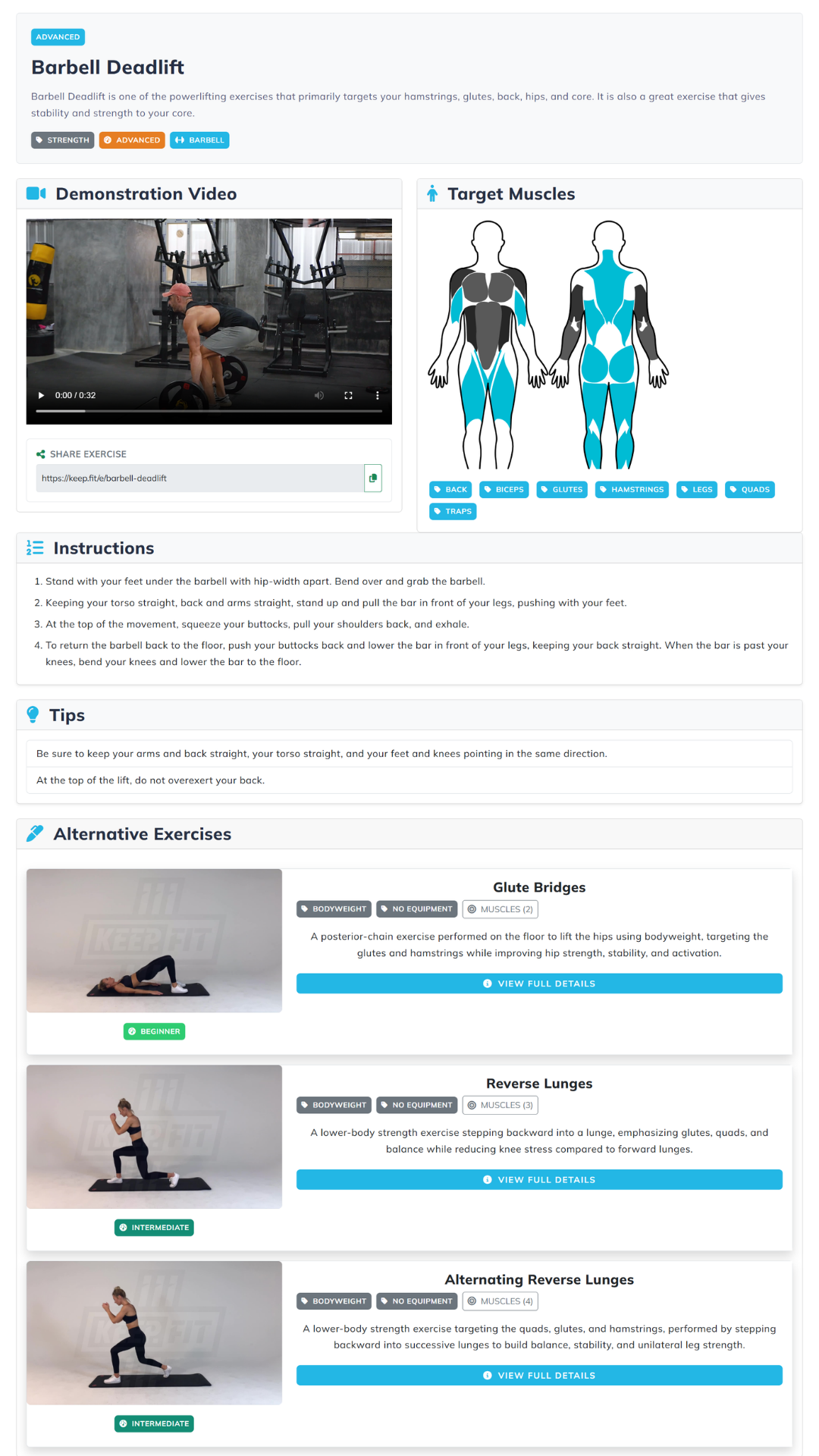
Exercise Explainer
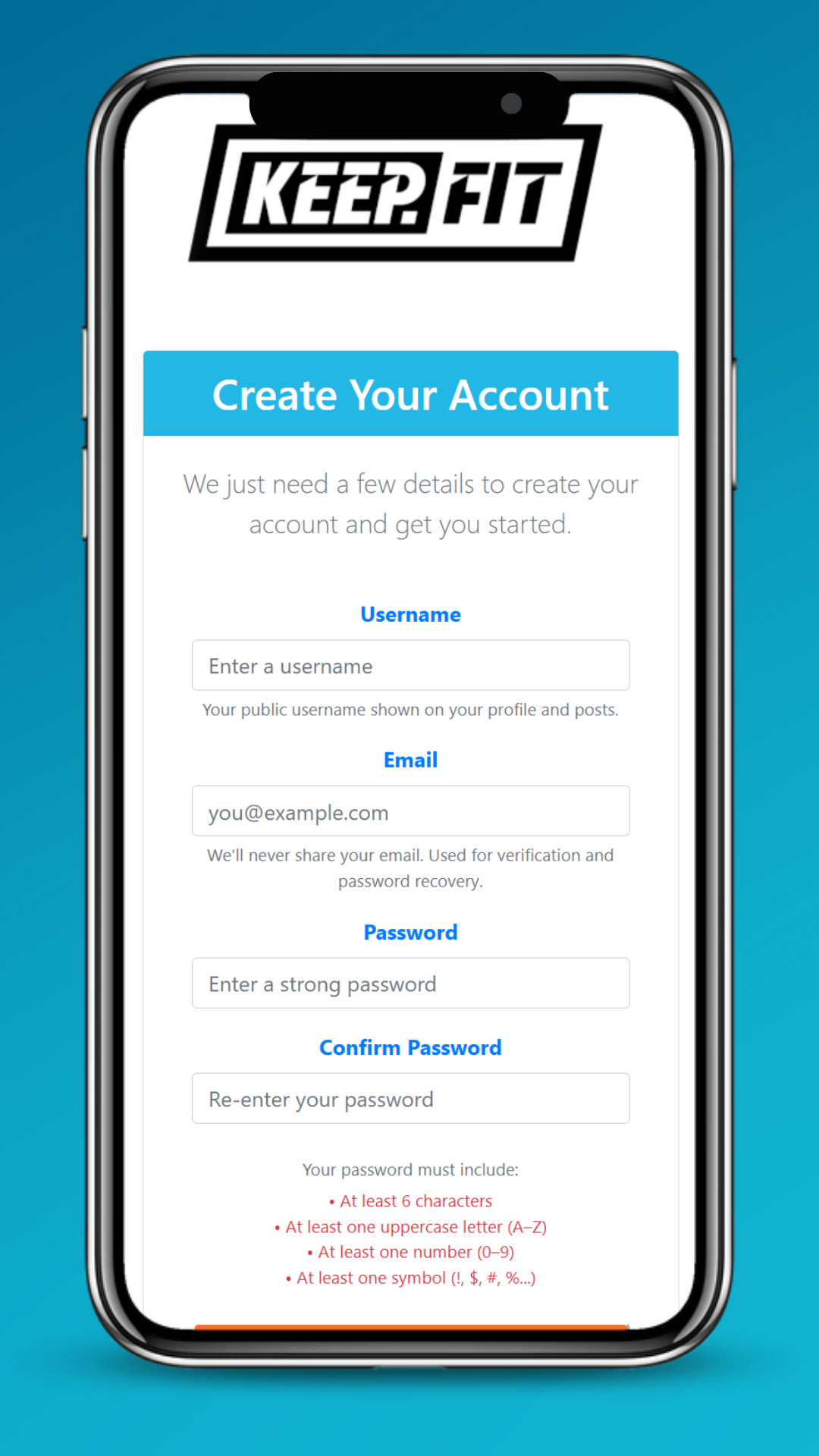
Mobile Design 1/3
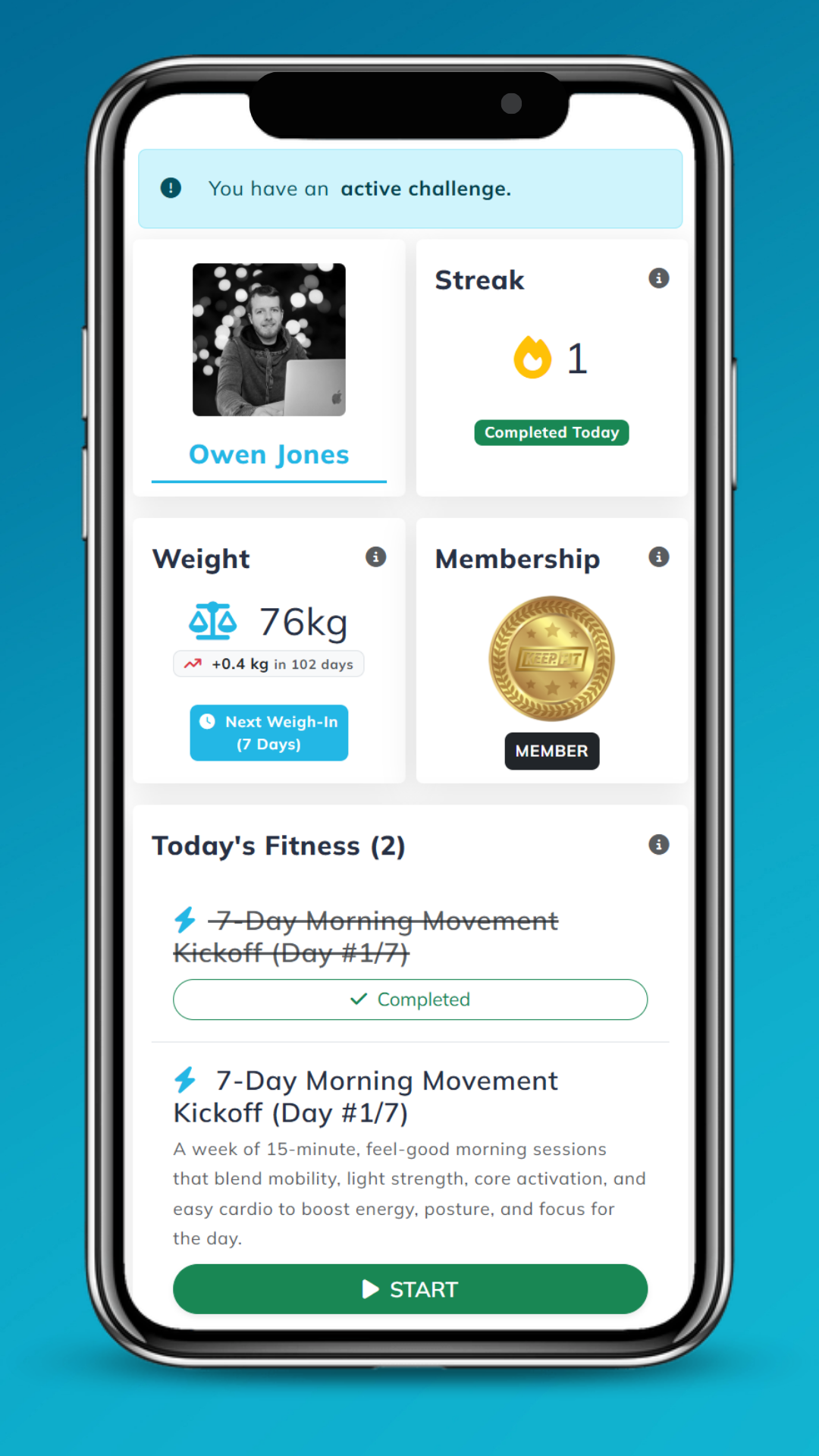
Mobile Design 2/3
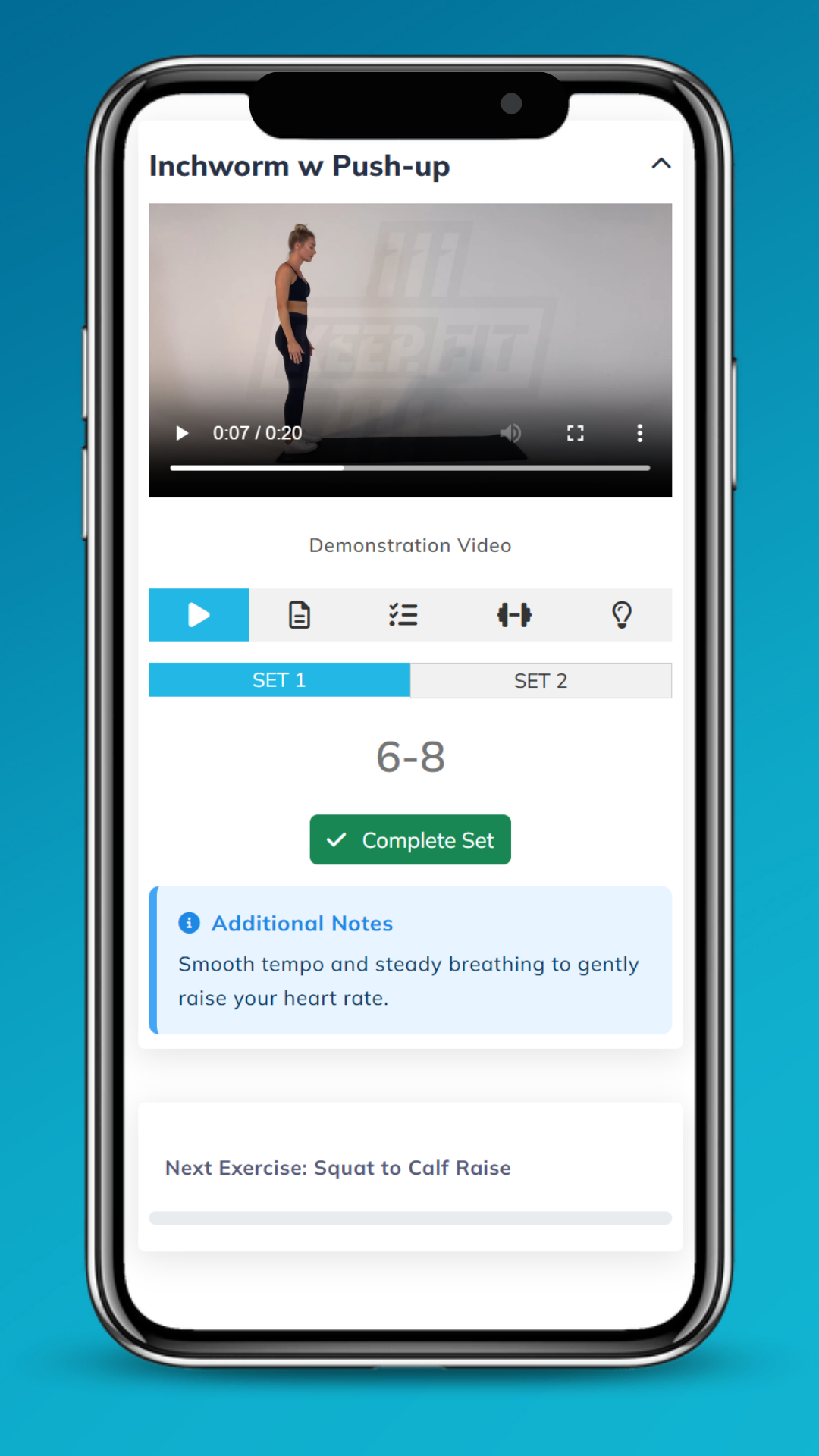
Mobile Design 3/3
Where the Product Stands
KEEP.FIT is live. The platform has gone through two distinct versions - the original content-led model and the current community platform - and the second version is the right one. The decision to rebuild rather than iterate was not comfortable, but it was correct. A platform built on community-generated content has a growth model that a content-owned platform does not.
The rebuild also clarified something about how OLXR approaches product work. The willingness to identify when a model is wrong and change it - rather than continue building on a flawed foundation - is the same discipline we apply to technical decisions. The model changes when the evidence requires it, not when it is convenient.
Technical Reference
Have a project in mind?
We are happy to discuss what you are building and whether we are the right fit.
Start the Conversation